The Century's Biggest Convergence: Silicon Meets Gigawatts
The world of computing is confronting a tangible physical limit: electricity. For the past two years, capital market narratives have been dominated by who can make the fastest AI chips. However, in the second half of this year, the question global fund managers are asking has shifted from "How many GPUs can you buy?" to "Where do you get the gigawatts of electricity to power them?".
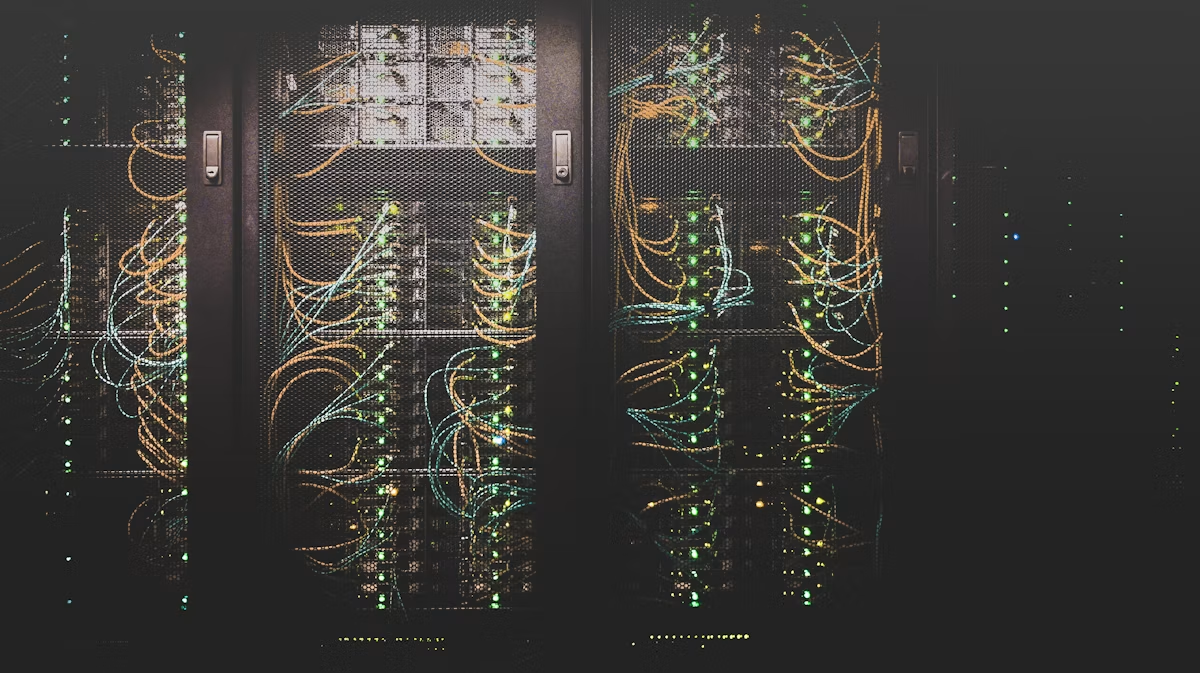
Conventional data centers typically require about 7 to 10 kilowatts (kW) per server rack. Servers based on the NVIDIA Blackwell NVL72 architecture consume over 120 kW per rack, generating immense heat that necessitates integrated liquid cooling and uninterrupted 24/7 baseload power supply.
Who Controls This Supply Chain?
1. AI Chip & Fabrication Kings (NVDA & TSM):
NVIDIA continues to maintain gross profit margins above 70% thanks to insatiable demand from hyperscalers. TSMC remains the sole advanced silicon manufacturer capable of packaging large-scale AI chips using CoWoS technology.
2. Clean Power & SMR Nuclear:
On US exchanges, stocks like Constellation Energy (CEG) and Vistra surged after Microsoft agreed to purchase all power from the Three Mile Island nuclear plant.
3. Indonesian Domestic Market Connections (BREN.JK & AMMN.JK):
Indonesia holds a dual strategic role:
- BREN.JK (Barito Renewables): Holds the largest geothermal capacity in the region, a highly sought-after baseload green energy source for regional green data centers (such as in Batam and West Java).
- AMMN.JK (Amman Mineral): Demand for copper transmission cables for global data center busbar connectivity has surged up to twofold per megawatt of installed capacity.
Portfolio Implications & Risk Scenarios
Investors who only hold software stocks risk missing the biggest capital rotation of the decade. Strategic allocation is now flowing into physical infrastructure companies: copper, liquid cooling, high-voltage electrical transformers, and renewable energy.
Regulatory Risk Warning: Regulatory hurdles for PLN grid connection permits and US utilities could delay data center facility completion by 2–4 years, potentially triggering valuation compression if AI revenues do not immediately generate real operating profits for cloud tenants.