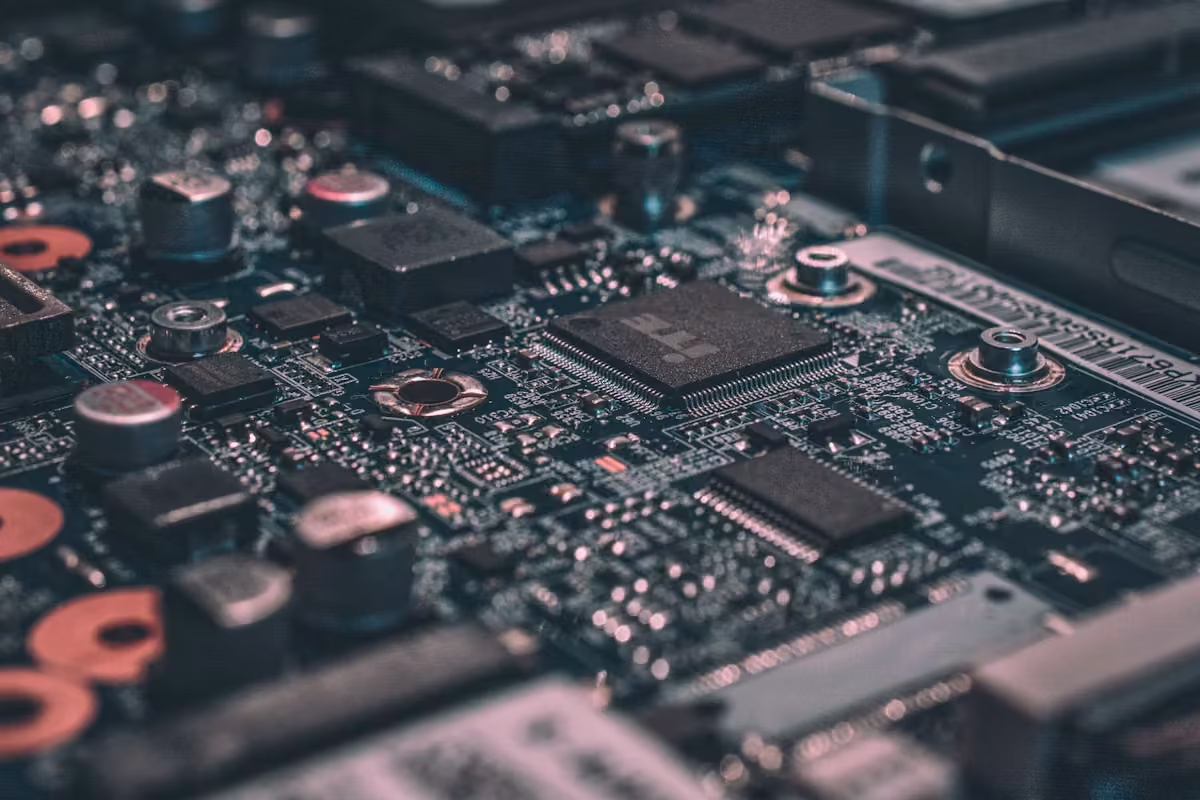
The Computation Paradox: When Silicon Shakes the Energy Sector
The technology industry faces a fundamental dilemma: artificial intelligence, which promises a productivity revolution, is hindered by the physical limitations of power generation. Behind the valuation surge of semiconductor giants like NVDA and TSM lies a hard reality: every new teraflop of computation requires stable megawatts of power. Modern data centers do not just need electricity; they need consistent baseload power 24/7, something difficult to achieve with intermittent sources like solar or wind.
Capital Flows: From Silicon to Soil
This is where the capital markets narrative shifts. Institutional investors are beginning to reallocate portfolios from pure technology exposure to sectors that provide the 'fuel' for that technology. In Indonesia, two issuers are under sharp scrutiny: BREN.JK (Bumi Resources) and AMMN.JK (Amman Mineral).
"We are no longer buying the AI future at the application level; we are buying it at the physical infrastructure level: cables, steam pipes, and copper mines."
BREN.JK: The Sleeping Geothermal King
Geothermal is the technical answer to the AI baseload problem. In Indonesia, BREN holds significant geothermal assets that are now a global favorite. The bull case is strong:
1. Scalability: Geothermal plants can be built with large capacities and continuous operation.
2. Regulation: Government support for the energy transition accelerates permitting.
3. Valuation: It remains relatively cheap compared to global peers in the geothermal sector.
However, the bear side warns of execution risks. The capital expenditure (CAPEX) for building geothermal power plants is very high and time-consuming. If AI power demand growth slows, BREN's stock price could face a sharp correction due to interest rate sensitivity.
AMMN.JK: Copper, the Backbone of the Grid
While BREN provides power, AMMN.JK provides the conductor. Copper is a critical component in data cables, transformers, and server cooling systems. With global data center expansion, copper demand is predicted to face a structural deficit.
As a major copper producer in Indonesia, AMMN directly feels the effects of rising commodity prices. The correlation between copper prices and AMMN's performance is very high. Investors seeking hedging against technology inflation may view AMMN as a more defensive instrument compared to pure technology stocks.
Strategy Comparison Table
| Aspect | BREN.JK | AMMN.JK |
|---|---|---|
| Resource | Geothermal (Energy) | Copper (Commodity) |
| Key Risk | CAPEX & Permitting | Commodity Price Cycle |
| AI Correlation | Indirect (Power Infrastructure) | Direct (Hardware Component) |
| Risk Profile | Aggressive/Growth | Value/Mid-Cycle |
Portfolio Implications
For quantitative investment committees, the combination of BREN and AMMN offers intelligent diversification. NVDA and TSM remain the core of the portfolio to capture revenue growth, but an allocation of 10-15% to BREN and AMMN will protect against the energy bottleneck risk that could hinder chipmaker revenue growth if power is unavailable.
In conclusion, the AI power crisis is not a hindrance but a catalyst for Indonesia's clean energy and industrial commodity sectors. Markets that ignore this connection will fall behind the global capital flows now seeking the physical foundation for the next digital era.